How to Grow a Cleaning Business from $5K to $20K per Month
$5,000 a month and $20,000 a month are different businesses. The gap is usually mix, retention and how many hours you can actually staff — not one more Facebook post.
Growth Professionals · 25 Oct 2026 · Australia · About a 11-minute read. No invented client results. Figures are worked examples, not promises.
This is a planning article, not a result
$5,000 a month and $20,000 a month are useful planning rungs. They are not typical outcomes and they are not a Growth Professionals guarantee. $100K in year one is about $8,333 a month — a planning number, already explained on the $100K page. Nothing below is a client case study.
The gap is usually mix, retention and hours you can staff. Marketing that only chases once-off bond cleans will keep you at “busy but still $5K”. Marketing that fills a diary you cannot serve will make you decline jobs and train Google the wrong way.
What $5,000 a month often looks like
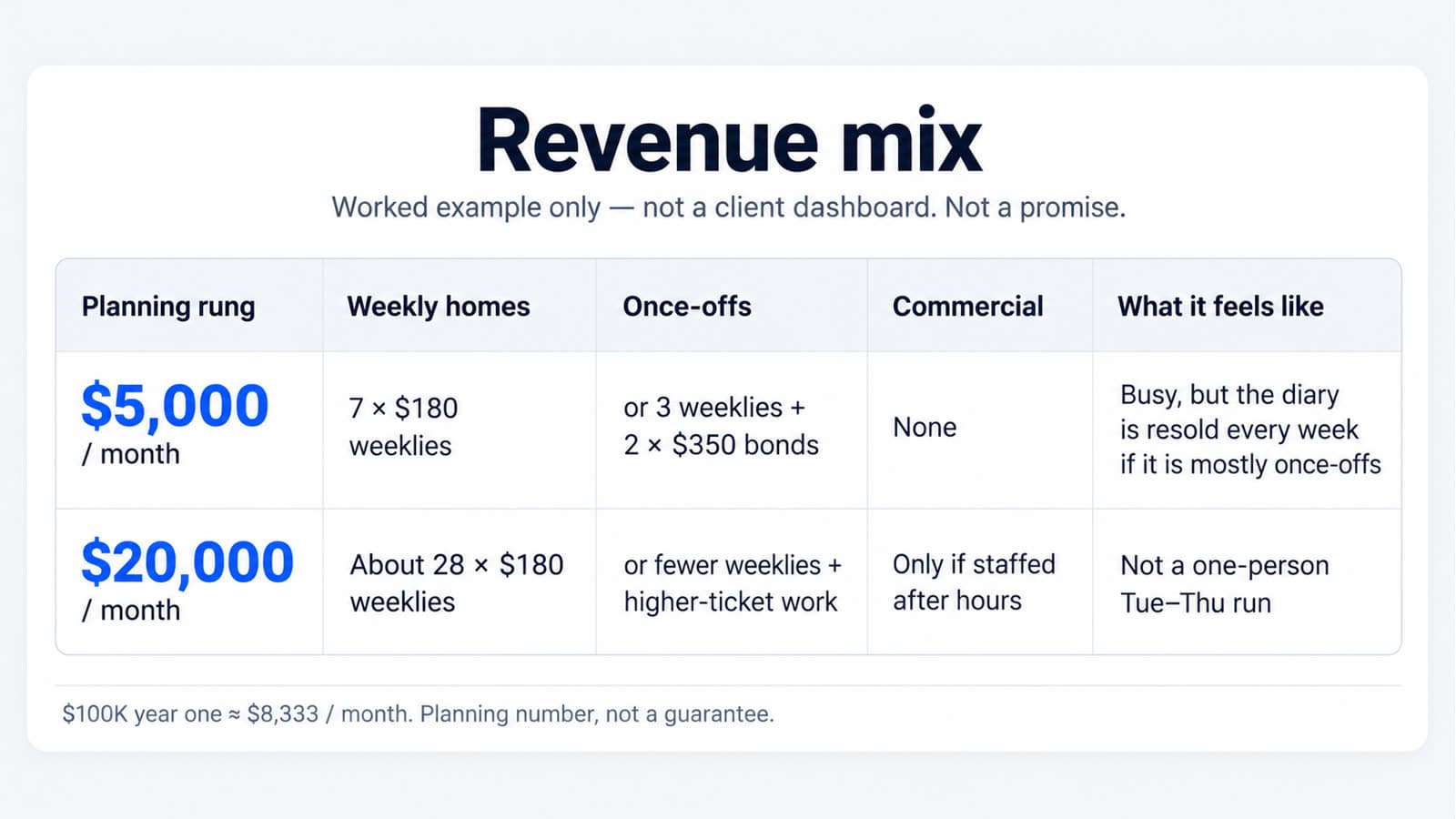
Worked example only. $5,000 a month is about $1,250 a week. That might be:
- seven $180 weekly homes, or
- three $180 weeklies plus two $350 bond cleans, or
- a messy mix of once-offs, cancellations and gaps.
The third version feels like hard work because you re-sell the diary every week. The first version is a small recurring book. Same revenue, different business.
What $20,000 a month actually requires
$20,000 a month is about $5,000 a week. Worked example only, at $180 a weekly clean: you need the equivalent of about 28 weekly homes — or a smaller number of weeklies plus higher-ticket commercial or end-of-lease work. That is not a one-person Tuesday-to-Thursday run unless prices are much higher or the jobs are longer.
So the first question is not “how do I get more leads?”. It is “which mix can I staff in 90 days without wrecking quality?”. Then marketing supports that mix. See how to get cleaning clients for the acquisition list; this page is the arithmetic around it.
Lever 1: recurring customers
A $180 weekly clean over eight months is $5,760 before extras. A $350 bond clean is useful fill. It is not the same asset. Say the recurring offer on the homepage and the house-cleaning page. Make it easy to go from a first clean to a regular slot.
If your site only talks about “call for a quote”, people will treat you as once-off even when you want recurring work. That is a website conversion problem as much as a sales problem.
Lever 2: pricing that matches the diary
If you are fully booked at $5,000, buying more ads is how you decline work. Raise prices on the jobs that crush the week. Stop discounting travel. Package extras (ovens, windows, fridges) instead of throwing them in. Pricing is marketing.
Do not copy a national “average house clean” from a blog. Use your last 20 invoices. If end of lease always overruns, the price is wrong or the inclusions are unclear — both belong on the service page.
Lever 3: staff capacity before lead volume
One person has a hard ceiling. Adding a second cleaner is not “an app”. It is insurance, a checklist, and enough recurring work that you are not gambling wages on a quiet week. The inbox question is when systems start to matter. Office software is not in the $200 week.
A useful rule: do not hire for a diary you cannot already almost fill with work you want to keep. Marketing should pull the jobs you can train someone on, not a random mix of emergency ovens.
Lever 4: retention
Keeping a weekly clean is cheaper than winning a new one. Reminder texts, a consistent cleaner where you can, and a simple way to skip a week will save more revenue than another click. Retention is also how you get reviews and referrals — both of which feed local SEO.
You do not need a loyalty app. You need a calendar and a message you actually send.
Lever 5: marketing systems in the right order
The Growth Professionals order is website, Google Business Profile, tracking, then organic pages. Ads only when someone can answer and you have room. Starting fees are $399 setup and $200 a week, three-month minimum. Ads later are $189 setup and $59 a week plus your media spend.
That order matches the marketing hub, SEO pillar and Google Ads pillar. It is also why we are not recommending a $10-a-day brand campaign while branded search is still empty. Impressions on generic agency terms do not move a cleaner from $5K to $20K.
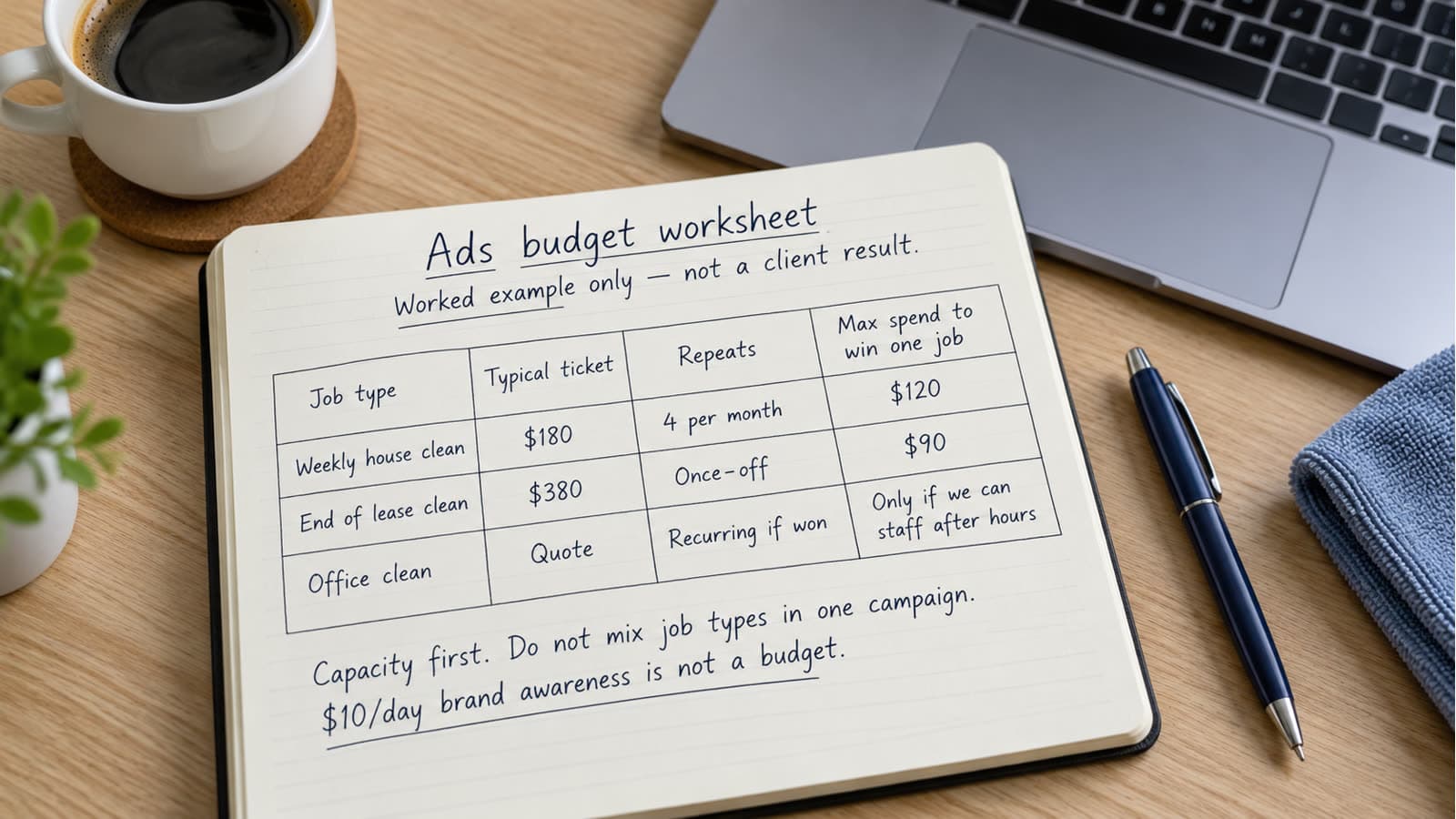
When you do pay for clicks, buy the job type you have capacity for. The ads spend guide is the budget worksheet. Do not mix end of lease and weekly homes in one campaign and then wonder why the diary feels chaotic.
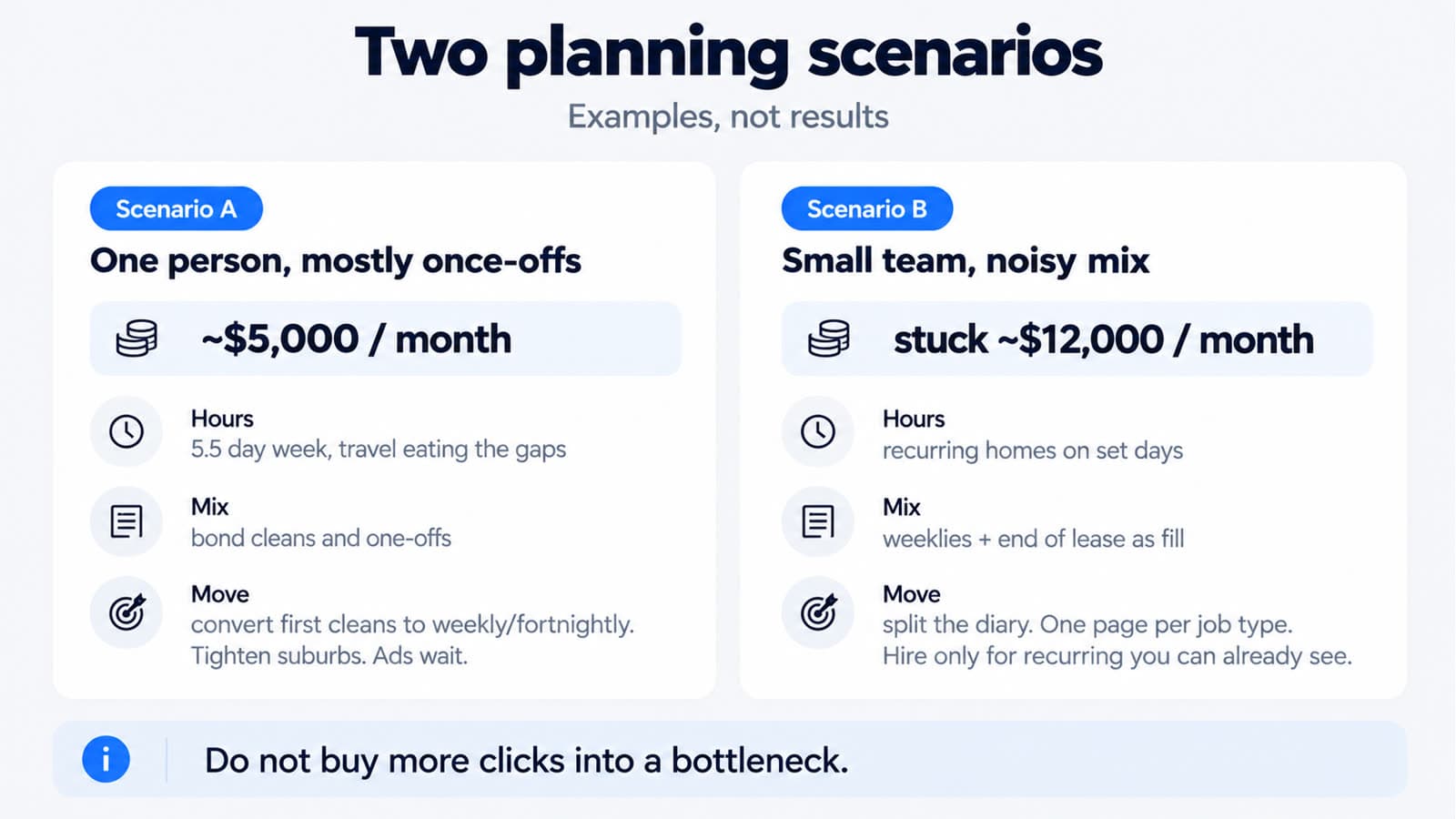
Scenario A: one person, mostly once-offs
Worked example only. You invoice about $5,000. Most of it is bond cleans and one-offs. The move is not “more Facebook”. Convert first cleans into fortnightly or weekly slots. Put that offer on the site. Ask for Google reviews after the jobs you want to repeat. Tighten suburbs so travel stops eating the margin. Ads wait until the quote path works.
Scenario B: small team, stuck around $12,000
Worked example only. You have help but the mix is still noisy. Split the diary: recurring homes on set days, end of lease as fill, commercial only if you can staff after hours. Give each job type a page. Measure booked jobs by type, not total enquiries. Hire only for the recurring block you can already see.
What not to do
Do not publish a revenue screenshot you cannot stand behind. Do not promise $20K on a homepage. Do not buy every suburb in the state. Do not add a third service you cannot staff because a competitor ranks for it. Do not treat $100K as a sales close.
If you want the commercial map of residential vs commercial vs end of lease, use the cleaning companies industry page. If you want month 1 sequenced, use how the Growth System works. This article is the arithmetic you can run on last month’s invoices.
Questions operators ask
Is $20,000 a month a typical result?+
No. It is a planning target some operators use to decide mix and hiring. Growth Professionals does not promise revenue, lead volume or a $100K year. $100K in year one is about $8,333 a month — a planning number, not a guarantee.
Can a one-person cleaner hit $20,000 a month?+
Only with a mix and a diary that the hours allow — often recurring work plus some higher-ticket once-offs, or by adding staff. If you are already fully booked, marketing without capacity just creates quotes you cannot take.
Should I raise prices or buy more ads first?+
If you are booked and still at $5,000, price and mix are the first levers. Ads make sense when you have room for the jobs you want and the site can convert them.
Where does the Growth Professionals plan sit in this?+
Month 1 is the website, Google presence, tracking and first search work so the jobs you want can find you. $399 setup and $200 a week, three-month minimum. Ads, apps and office systems wait until the diary can use them.
Keep going
Sibling guides in this cluster. Each one links back to the marketing hub and to /book.
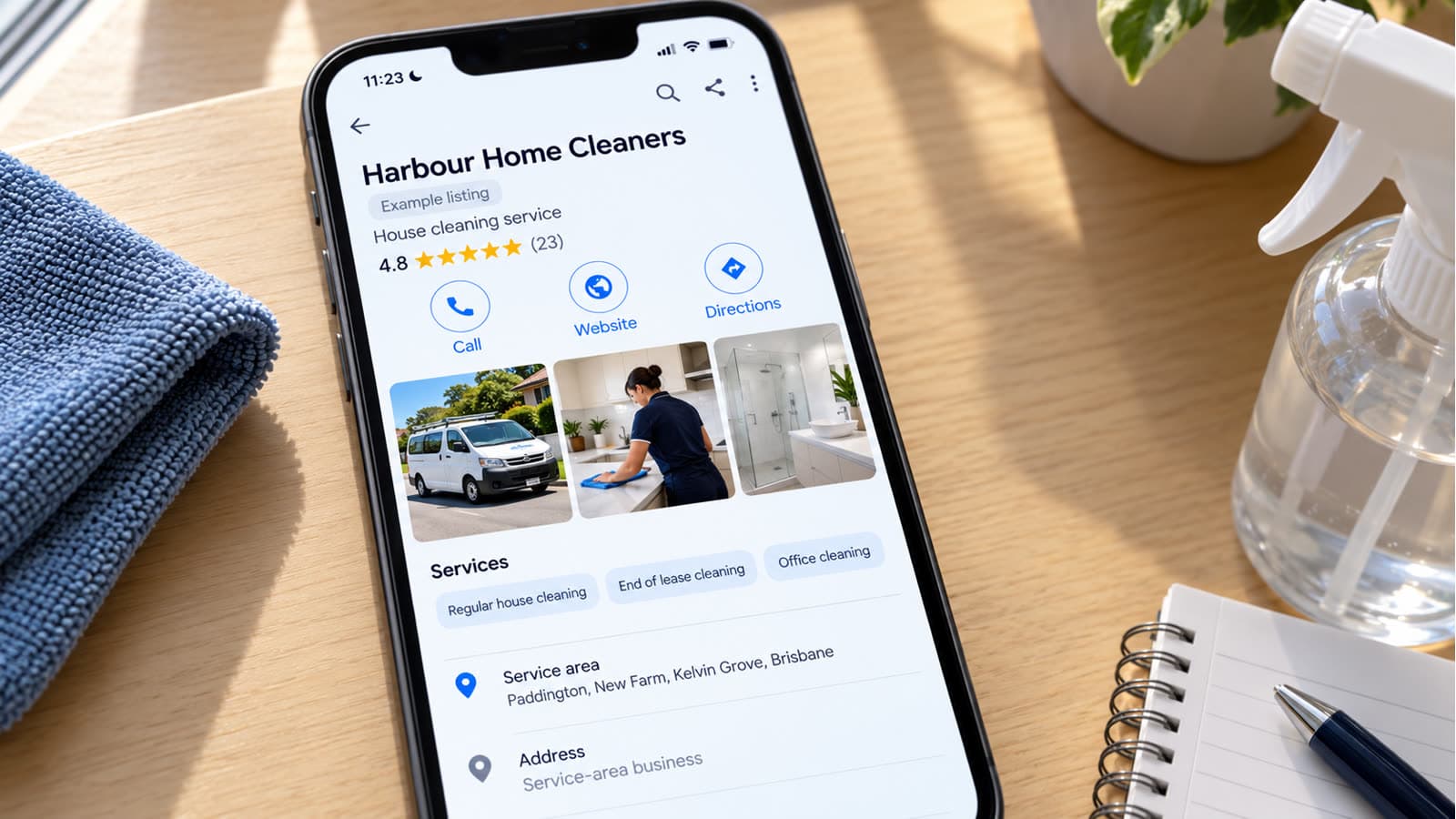 Cleaning Business Marketing
12 minutes read
How to Get Cleaning Clients in Australia: 15 Strategies
Google Business Profile, service pages, local SEO, ads only when you are ready, referrals, retention and how to measure a booked job — not vanity traffic.
Growth Professionals
Last updated on 25 Oct 2026
 Google Ads
11 minutes read
How Much Should Cleaning Businesses Spend on Google Ads in Australia?
Separate media spend from management fees. Use worked examples for weekly, end of lease and commercial work. Do not switch ads on to “get the name out”.
Growth Professionals
Last updated on 25 Oct 2026
 Websites
10 minutes read
10 Reasons Your Cleaning Business Website Isn't Generating Leads
Poor page speed, unclear services, missing service areas, weak calls to action, form friction and sending ads to a homepage that cannot convert.
Growth Professionals
Last updated on 25 Oct 2026